Adult Wing Chun students begin with Wing Chun Boot Camp™, the entry point into the complete West Coast Wing Chun curriculum. Boot Camp establishes the structure, movement, coordination, conditioning, and core principles students need before advancing into the traditional system.
Training then progresses through Siu Lim Tao, Chum Kiu, Biu Gee, the Luk Dim Boon Kwan long pole, and Bot Cham Do butterfly knives. Each phase builds on the last, developing a deeper understanding of Wing Chun through body mechanics, timing, power, sensitivity, application, and weapons training.
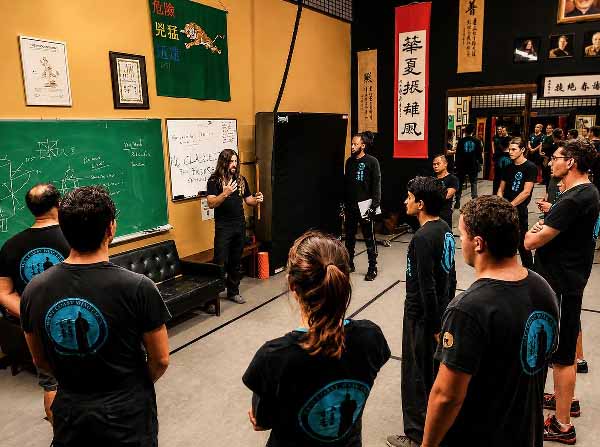
Every student enters through the same foundation and progresses through increasingly advanced levels of skill, application, and understanding.
Foundation. The required entry point into the West Coast Wing Chun system.
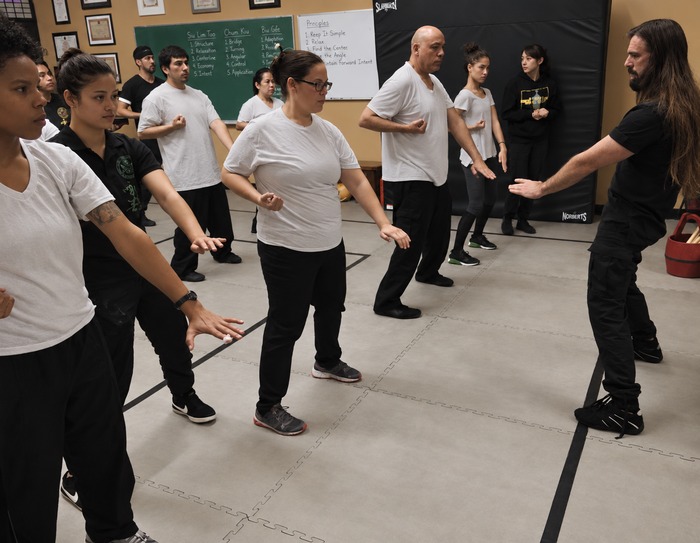
Wing Chun Boot Camp™ introduces the fundamental skills and concepts every student needs before entering the formal Wing Chun curriculum. Training focuses on structure, centerline, relaxation, economy of motion, facing, fighting zones, footwork, and the body mechanics used throughout the West Coast Wing Chun system.
Students begin learning Siu Lim Tao while developing fundamental attack and defense methods through structured partner drills. Dan Chi Sau, foundational footwork, conditioning, and introductory Qi Gong are also incorporated to develop coordination, sensitivity, control, and efficient movement.
Completion of Wing Chun Boot Camp™ includes a written examination and demonstration of the Siu Lim Tao form before advancing to Phase 2.
Beginning Wing Chun
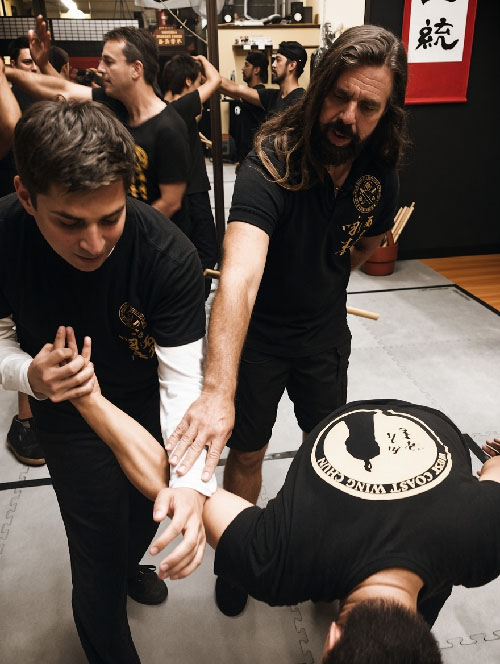
Siu Lim Tao builds on the foundation established in Wing Chun Boot Camp™ through 27 focused classes designed to develop skill, understanding, and practical application quickly and effectively.
Training expands into San Sik handwork and footwork, anti-grappling, groundwork, inside-line control, kick defense, sensitivity, and power development—all taught through the principles and concepts of Wing Chun.
Students typically spend six months to a year and a half completing this phase, depending on training frequency and individual progress. All 27 classes must be completed, and students are tested for proficiency throughout the level.
Advancement to Phase 3 — Chum Kiu requires successful completion of the Siu Lim Tao curriculum and a written and physical examination.
Intermediate Wing Chun
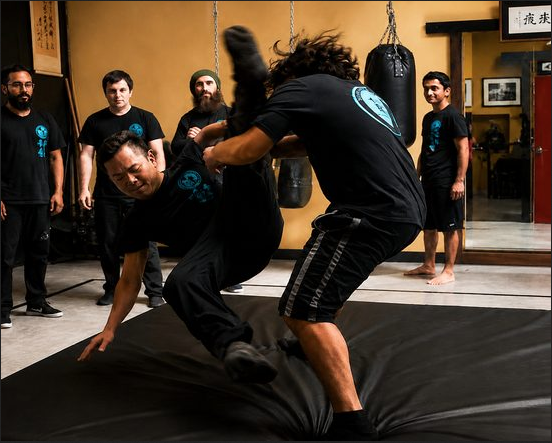
Chum Kiu builds directly on everything developed in Wing Chun Boot Camp™ and Siu Lim Tao. While Siu Lim Tao focuses primarily on the practitioner’s own structure, coordination, positioning, and relationship to an opponent, Chum Kiu shifts the emphasis toward controlling, compromising, or destroying the opponent’s structure.
Training develops the ability to bridge safely from no contact into contact and then control what happens once that connection is made. The curriculum places strong emphasis on bridging, controlling and trapping, Chin Na, kicking, advanced striking, sensitivity, reflex, and the use of Wing Chun principles and concepts under increasing pressure.
The Chum Kiu curriculum is divided into three progressive levels comprising 62 classes in total. Students must complete the required classes and demonstrate proficiency through formal testing at each level.
Advancement requires both practical competency and successful completion of a written and physical examination before progressing to Phase 4 — Biu Gee.
Applying Wing Chun against active resistance.
Beginning at the Chum Kiu level, students are introduced to progressively more demanding training designed to test Wing Chun against active, less predictable resistance.
The goal is not simply to perform techniques faster. Students learn to maintain structure, timing, awareness, decision-making, and control as pressure and unpredictability increase.
Learning to recognize and manage changing range, entries, attacks, and opportunities as they occur.
Developing the ability to remain functional, aware, and controlled as resistance and intensity increase.
Moving beyond rehearsed responses and applying Wing Chun principles to situations that change in real time.
Testing structure, movement, offense, defense, and decision-making against increasing resistance.
Learning to increase training intensity while maintaining technical control and protecting training partners.
Fighting Under Pressure is part of the West Coast Wing Chun Chum Kiu curriculum.
Depending on the school, this training may be incorporated directly into regular Chum Kiu classes, taught through dedicated classes or training sessions, or use a combination of both approaches.
The training format may vary, but the objective remains the same: developing the ability to apply Wing Chun under increasing levels of resistance and unpredictability.
Advanced Wing Chun
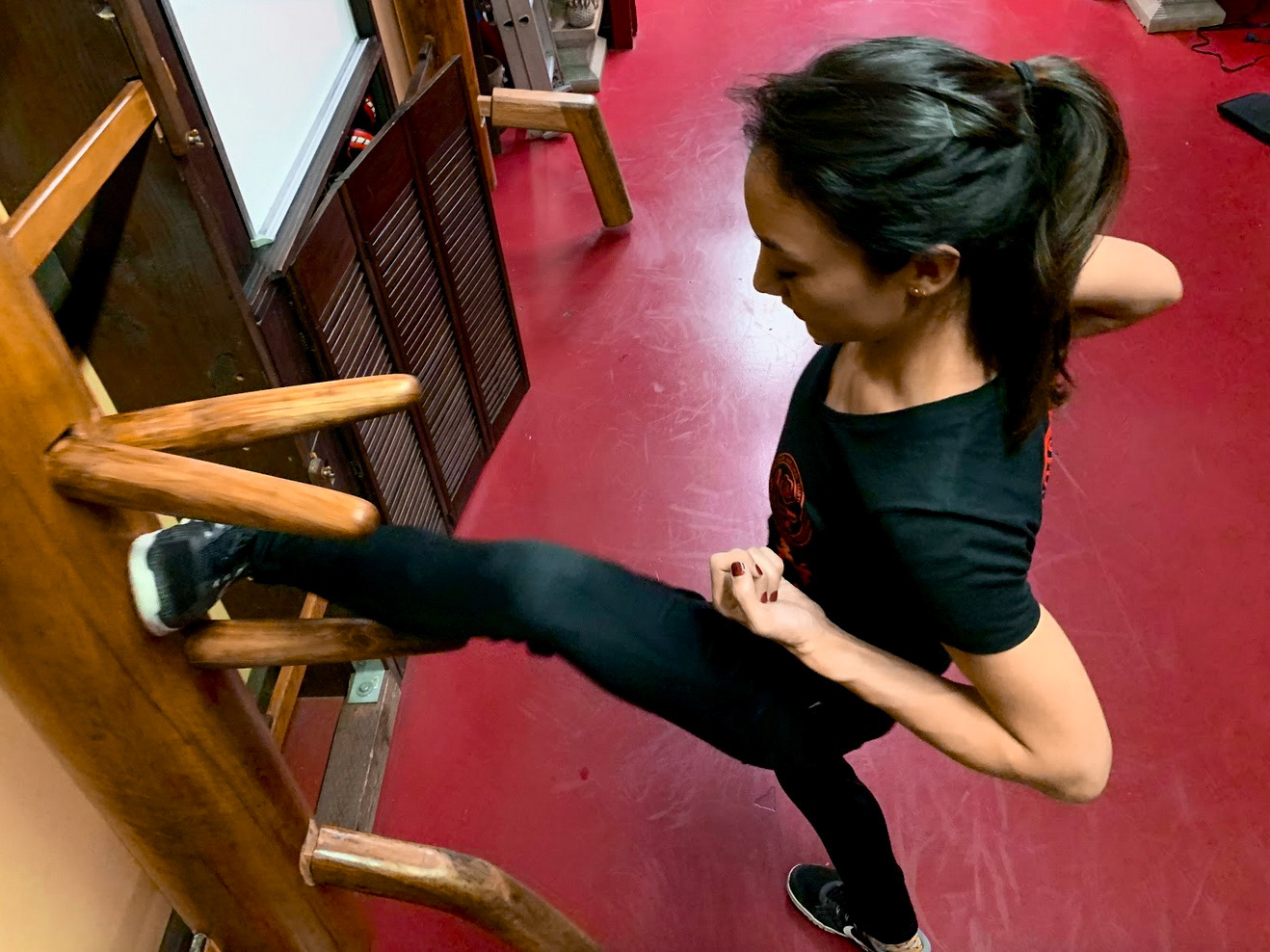
Biu Gee marks a major shift in the West Coast Wing Chun curriculum. The training becomes more circular, adaptive, and less dependent on fixed patterns. There is a strong emphasis on free-thinking, recovery, advanced power, and application under increasingly unpredictable conditions.
Biu Gee is taught only to students who have demonstrated the discipline, consistency, skill, and commitment required to earn their place at this stage of the system. Reaching this level represents more than time spent training—it reflects a willingness to continue refining the work when the material becomes more demanding.
Students should expect to spend a minimum of one year at the Biu Gee level. We encourage every student to remain focused enough to reach this phase and continue through the complete West Coast Wing Chun system.
6½ Point Long Pole
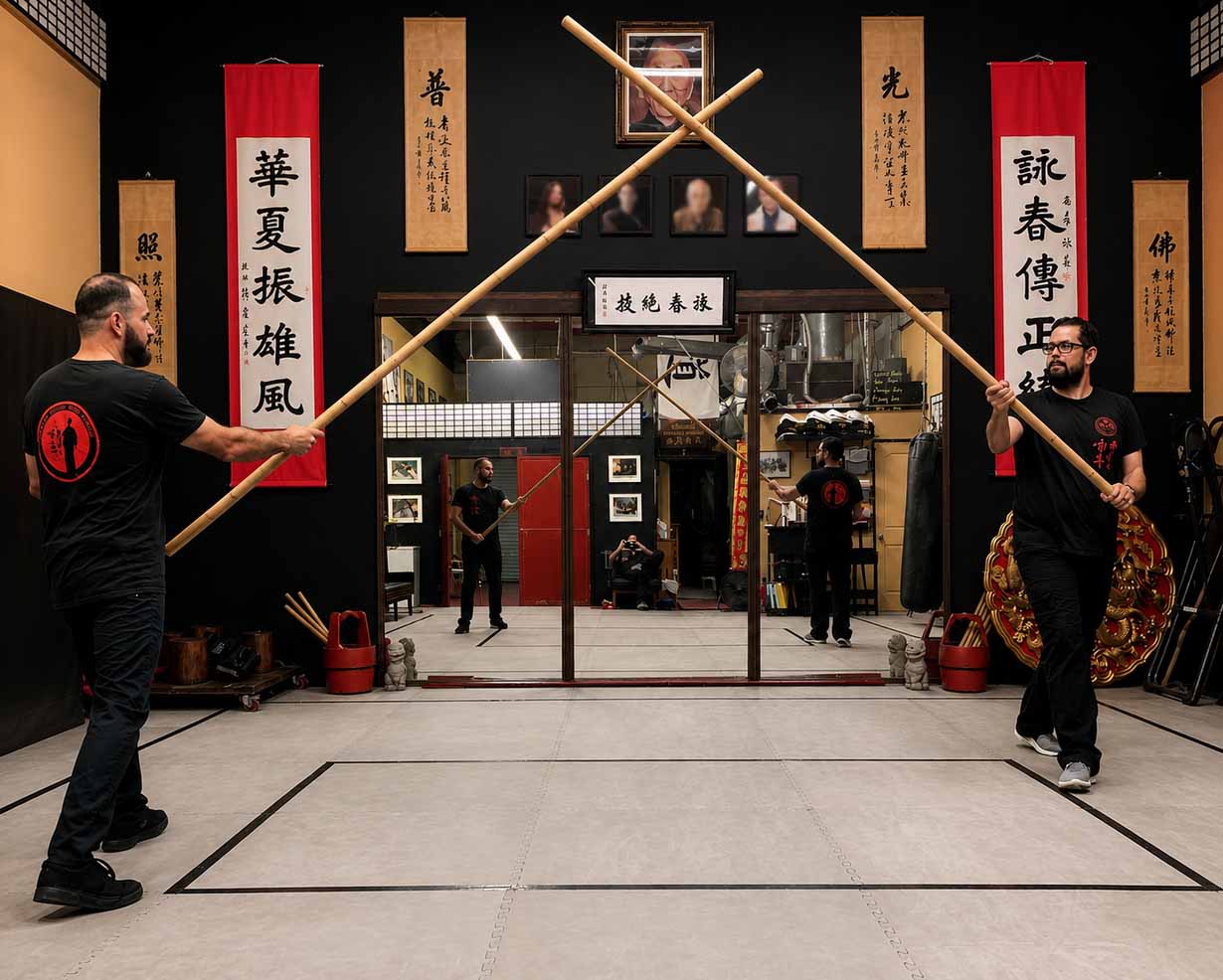
Luk Dim Boon Kwan training centers on the form and 18 lessons designed to develop an understanding of the application of the 6½ movements and energies of the Long Pole.
Students explore how each movement functions, how the energies are expressed, and how they are applied within the weapon system. The training develops a deeper understanding of power, structure, range, timing, and coordinated whole-body movement.
Advancement is based on demonstrated technical and functional ability, rather than simply completing a set number of classes.
Butterfly Knives
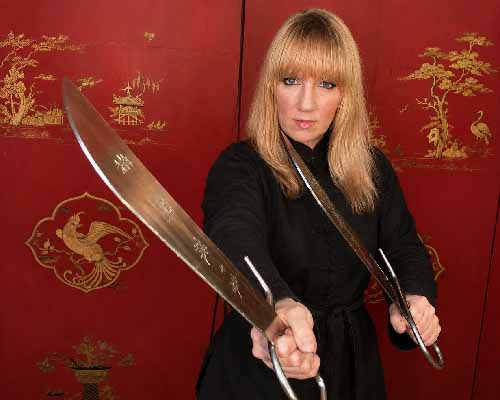
Bot Cham Do training begins with learning the form and the functional application of its movements.
The curriculum is based on developing a comprehension of the Eight Ways to Slash and understanding how each is used functionally.
As students progress, the emphasis moves from correct form and energy to functional application and technical control.
Advancement is based on demonstrated aptitude, proper energy, and functional technical ability.
Every journey through the West Coast Wing Chun system begins with Wing Chun Boot Camp™. Find an authorized WCWC school or training location and take the first step.