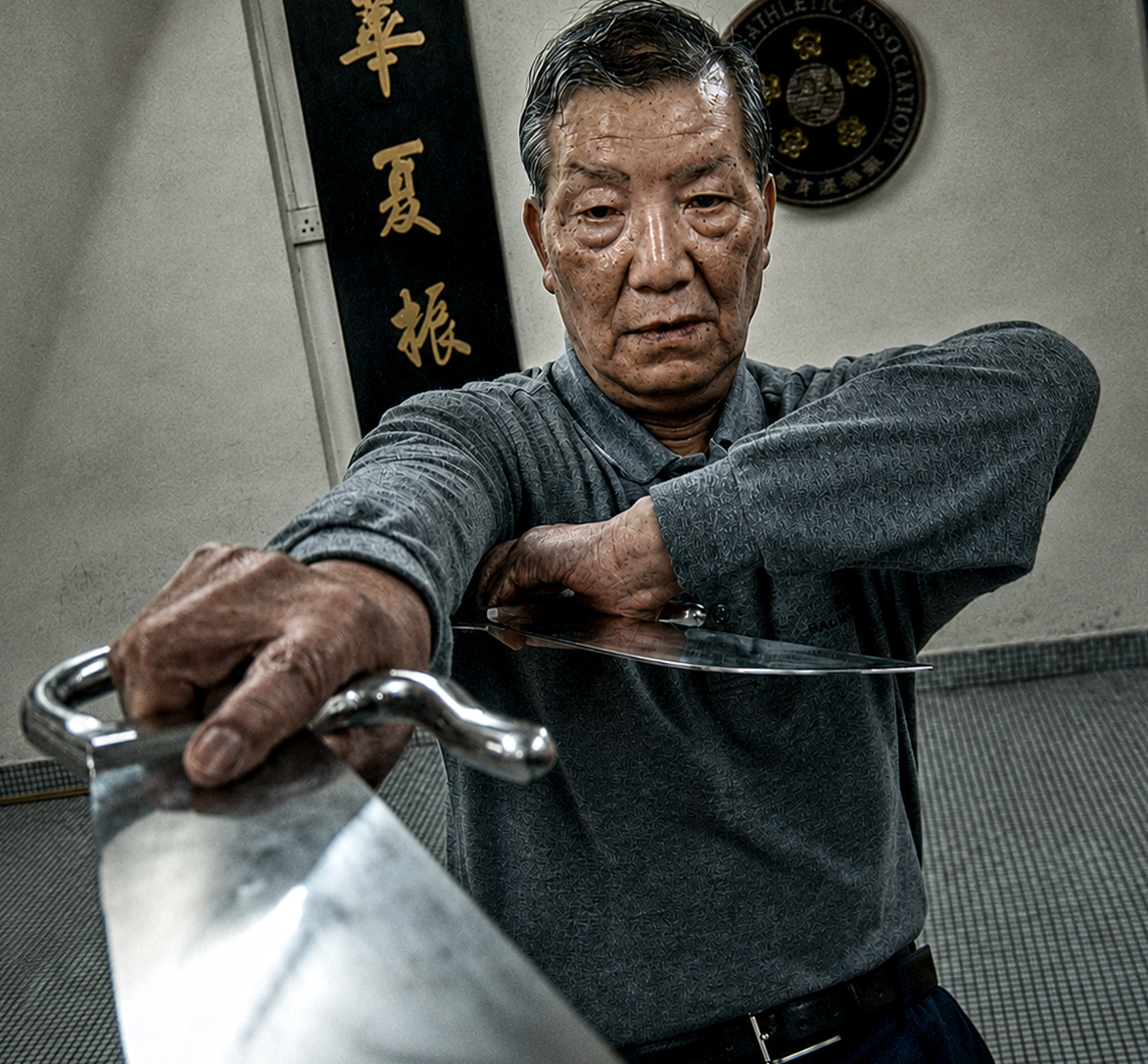
Ip Ching: The Quiet Guardian of Wing Chun
A Personal Reflection on the Man Who Preserved a Martial Legacy
When people hear the name Ip Man, they often think of the legendary martial artist made famous through books and films. His influence on Wing Chun is undeniable, having introduced one of China’s most sophisticated fighting systems to the modern world.
Yet every great legacy depends upon someone willing to preserve it. For Wing Chun, that person was Ip Ching.
Imagine growing up with the man history would remember as Grandmaster Ip Man. To the martial arts world, he became a legend. To Ip Ching, he was simply his father.
Like many sons, he probably could not have imagined that the quiet lessons taking place at home would one day become part of martial arts history. That unique relationship gave him something almost no one else possessed: not only knowledge of Wing Chun’s techniques, but an intimate understanding of the man who developed and refined them throughout his lifetime.
Although he never sought fame, Ip Ching became one of the most respected guardians of his father’s art. Through decades of teaching, traveling, and patiently correcting students one movement at a time, he ensured that the principles of traditional Wing Chun would survive intact for future generations.
Those fortunate enough to train with him quickly discovered something remarkable. His greatest lessons rarely came through spectacular demonstrations.
Ip Ching: The Teacher Behind the Master
Students often arrived at Ip Ching’s seminars expecting secret techniques. Instead, they found themselves returning to the basics. Again and again.
Ip Ching had an extraordinary ability to notice the smallest imperfections: an elbow moved half an inch, a shoulder relaxed, or the spine aligned more naturally. Suddenly, everything worked better.
Power appeared without force. Speed emerged without effort. Balance improved almost instantly.
Watching him teach made one thing abundantly clear: Wing Chun isn’t complicated. It’s precise.
The Day I Touched Hands with Ip Ching
One of my favorite memories of Ip Ching wasn’t simply watching him teach. It was having the opportunity to experience his Wing Chun firsthand.
In the early 1990s, I attended one of his seminars in Utah. Like many students, I was eager to learn from a man who had dedicated his life to preserving the art his father had entrusted to him.
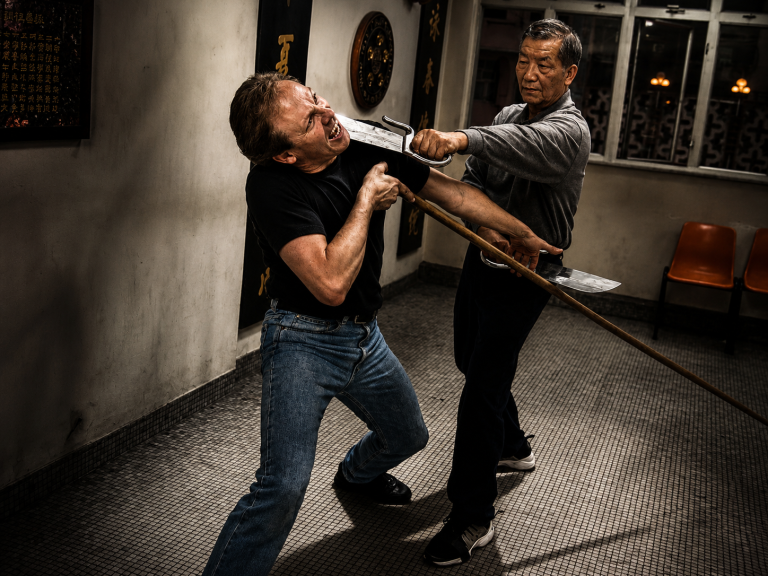
Near the end of the seminar, my Sifu, Ron Heimberger, introduced me to Ip Ching and invited me to touch hands with my Sigung for the very first time. We began rolling Chi Sau. Within moments, Ip Ching smiled and complimented my rolling. Then, through his interpreter, he issued a challenge.
“Hit me.”
Before I had time to react, my Sifu leaned over with a quiet smile and offered one piece of advice.
“Don’t go crazy.”
I remember thinking to myself, I’m not here to kill myself.
Almost immediately, the interpreter clarified. “He wants you to try to hit him any way you can.”
Well, when your Sigung gives you permission, you don’t hesitate. I launched my attack with every sincere intention of finding an opening.
I never found one.
Before my mind could even register what had happened, both of my arms were effortlessly trapped, my structure had completely disappeared, and I felt the unmistakable sting of a perfectly placed palm strike land squarely in the center of my chest.
It happened so quickly that I couldn’t reconstruct the sequence. There was no dramatic movement, no unnecessary force, and no flourish. There was only absolute efficiency.
Several hours later, a bruise appeared across my chest. But the bruise wasn’t what stayed with me. The lesson did.
In those brief seconds, Ip Ching demonstrated everything his father had spent a lifetime teaching: economy of motion, superior structure, perfect timing, relaxation under pressure, and complete control. He could have struck much harder, but he didn’t need to.
That single palm strike spoke louder than any lecture ever could.
The handprint eventually faded. The lesson never did.
Ip Ching: The Storyteller
One of my favorite aspects of Ip Ching wasn’t his technical ability. It was his love of telling stories.
During seminars, he often spoke about his father. He shared stories that revealed Ip Man’s personality, humor, and approach to teaching, making him feel surprisingly human. Just as fascinating were the stories of his family’s ancestry and the rich history surrounding the Wing Chun lineage.
Those stories reminded us that every technique carried the wisdom of generations before us. Wing Chun wasn’t merely a collection of movements. It was a living tradition, shaped by countless practitioners who refined it through real experience.
Listening to those stories gave greater meaning to every drill, every form, and every correction. We weren’t simply learning techniques. We were becoming part of something much larger than ourselves.
More Than Fighting
Many people view Wing Chun solely as a self-defense system. Certainly, it is one of the world’s most efficient martial arts. But under Ip Ching, it became clear that the art extended far beyond fighting.
Relaxation. Humility. Patience. Sensitivity. Timing. Efficiency.
These were not simply combat attributes. They became life skills.
Perhaps that is why so many students left his seminars inspired rather than intimidated.
Ip Ching: His Greatest Legacy
Today, thousands of instructors around the world continue to teach Wing Chun. Many of them never had the opportunity to meet Ip Ching personally. Yet every time an instructor reminds a student to relax, every time an elbow is gently corrected, and every time someone learns that structure can overcome strength, a small part of his legacy continues.
That is how great teachers become timeless.
Not through trophies. Not through fame. But through the countless lives they quietly shape.
Final Thoughts
I’ve had the privilege of training with exceptional martial artists throughout my journey, but meeting Ip Ching remains one of its defining experiences.
Not because I survived a palm strike. Not because I met the son of Ip Man. But because, for a few brief moments, I experienced the principles of traditional Wing Chun exactly as they had been preserved through generations of dedicated practitioners.
Books can explain Wing Chun. Videos can demonstrate it. But occasionally, if you are fortunate, you encounter someone who embodies it.
For me, Ip Ching was that person.
His greatest gift was not simply preserving his father’s art. It was preserving its spirit.
About the Author
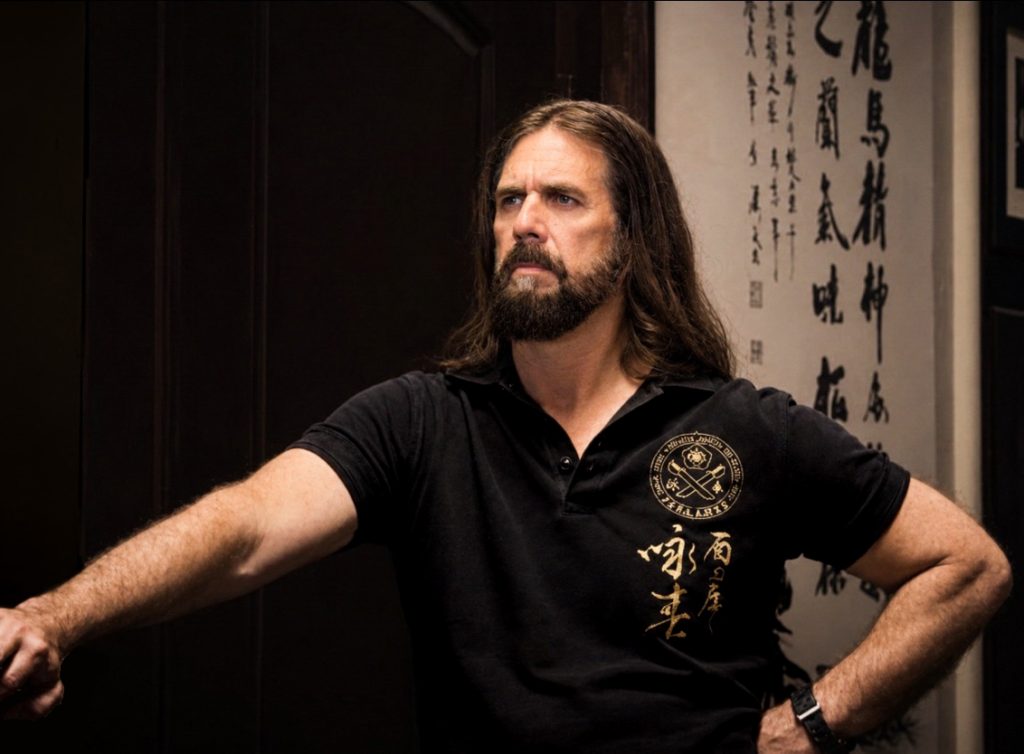
Sifu Bryan Talbot is the Chief Instructor of West Coast Wing Chun and has studied Wing Chun for decades under the guidance of Sifu Samuel Kwok and Sifu Ron Heimberger. His passion is preserving authentic Wing Chun while making its principles accessible to today’s practitioners.
Through West Coast Wing Chun, he continues to share the art’s rich history, practical application, and timeless philosophy with students around the world.